


Air cooling and liquid cooling, as the two mainstream technical paths for thermal management in today‘s new energy storage equipment, are not simply a matter of one being better than the other. Instead, they are differentiated choices based on power class, application environment, and cost targets.
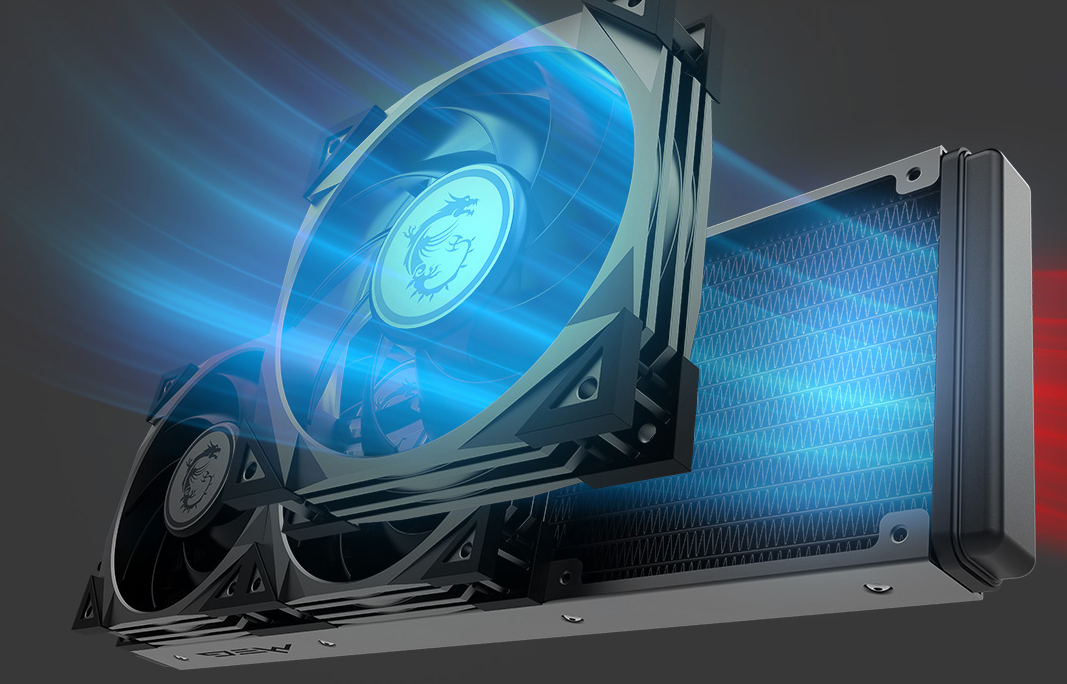
Air cooling uses fans to drive airflow and, together with optimally designed duct structures, actively expels heat generated by batteries and inverters. Thanks to its mature technical system and simple structural design, it has become the preferred solution for low-to-medium power energy storage equipment. The advantage of this technology lies first in its high reliability. After decades of industry use and validation, the core components of air cooling systems — such as fans and ducts — are supported by mature supply chains and quality control systems, resulting in low maintenance difficulty and controllable failure rates. Second, its cost advantage is significant, as it requires no complex piping, coolant, or sealing components, and the overall system structure is simple. As a result, air cooling is widely used in all-in-one residential energy storage units, wall-mounted battery systems, and small-to-medium commercial storage equipment, precisely matching the core needs of low-to-medium power applications for cost-effectiveness, easy maintenance, and installation convenience.
As technology continues to evolve, representative companies such as SUNGROW and SOLIS have improved air cooling efficiency by 15%–20% in residential and commercial inverters through intelligent airflow simulation optimization and AI-driven dynamic temperature control algorithms, while also reducing noise and power consumption, keeping air cooling highly competitive in the 8–30kW power range.
Air cooling systems adapt well to normal environments. Under typical temperature and humidity conditions, no additional leak-proof or anti-corrosion design is required, further lowering installation barriers and environmental constraints. However, the limitations of air cooling are equally clear. Its cooling efficiency is significantly affected by airflow speed and ambient temperature. In high-power, high-density energy storage systems, achieving uniform heat dissipation is difficult, which can easily lead to excessive temperature differences within the battery pack, subsequently affecting battery consistency and cycle life. Fan noise can become a drawback in residential or noise-sensitive scenarios. At the same time, in harsh environments with high temperatures, high dust levels, or high humidity, dust accumulation in ducts and fan wear pose challenges to long-term system stability.
In contrast, the core advantage of liquid cooling lies in its extremely high cooling efficiency and temperature uniformity. It circulates coolant through closed-loop piping, directly exchanging heat with battery modules or inverter core components, and then dissipates the heat to the environment via an external radiator, achieving precise thermal control and efficient heat transfer. The specific heat capacity of coolant is much higher than that of air, allowing it to quickly absorb and carry away heat generated during equipment operation. Even under high-power, high-load conditions, it keeps temperature differences within the battery pack extremely small, effectively avoiding accelerated battery degradation and safety risks caused by localized overheating, while significantly extending battery cycle life and overall system lifespan.
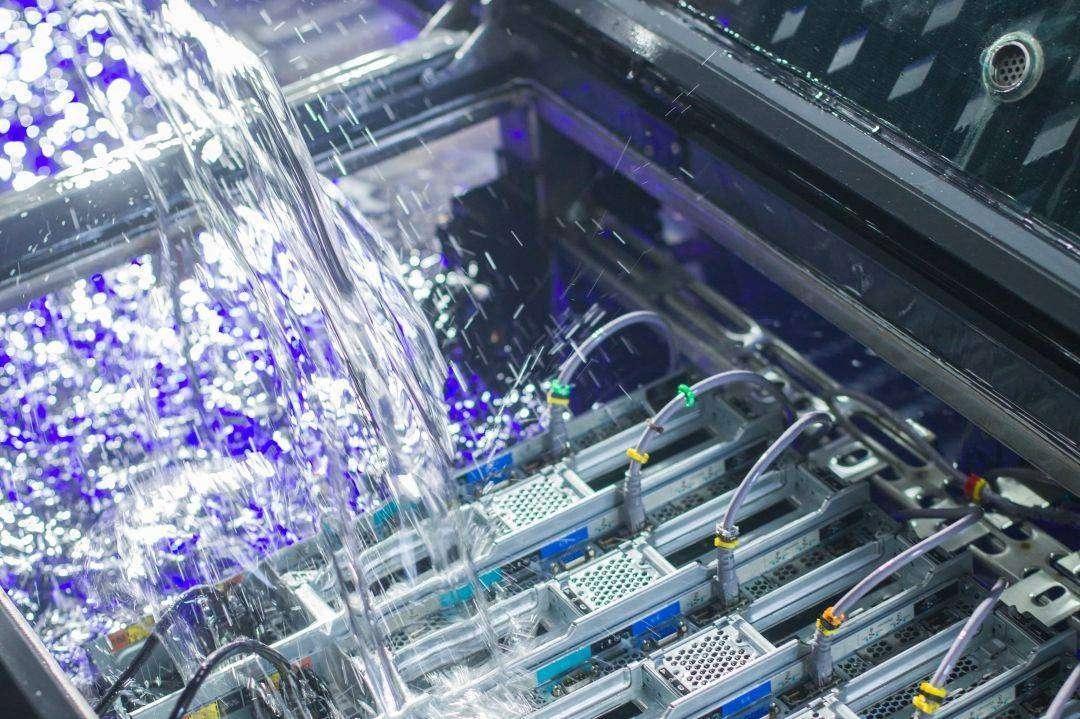
Liquid cooling systems operate with very low noise, requiring only a low-noise water pump to circulate the coolant. This characteristic gives them a unique advantage in energy storage projects located near commercial areas, residential neighborhoods, or other locations with strict noise control requirements. At the same time, the sealed piping design effectively isolates dust, moisture, and corrosive gases, ensuring stable operation even in harsh environments and greatly improving equipment reliability and durability.
Several companies have developed representative engineering practices for this technology:
EAST has launched a semi-immersive liquid cooling energy storage system that precisely sprays coolant onto high-heat areas such as battery poles. Achieving a cluster-level temperature difference of no more than 2°C at a cost close to that of air cooling, it increases the cycle life of its 6.7MWh single-cabin system by approximately 20%, offering a new path that balances performance and cost for high-power storage.
ENVICOOL provides system-level thermal management for the world‘s first 100-megawatt-scale digital energy storage power plant through its liquid cooling temperature control platform, keeping the temperature difference inside containers within 1.5°C in high-temperature, high-altitude scenarios.
HOYMILES has adopted a full-liquid-cooling architecture in its commercial energy storage systems, achieving a cell-level temperature difference of less than 2°C and reducing auxiliary power consumption by more than 30%, further driving the adoption of liquid cooling in medium-to-high power applications.
DEMUDA focuses on the distributed commercial and industrial energy storage track, offering liquid-cooled energy storage systems covering the 50kW to 120kW power range. Adopting a compact and high-efficiency liquid cooling architecture, it achieves a cell temperature difference of ≤2℃ while delivering IP54 high protection and low-noise operation, providing both reliable and cost-effective thermal management solutions for small-to-medium commercial and industrial projects across more than 150 countries and regions worldwide.
However, liquid cooling systems are structurally complex, with manufacturing process requirements and costs significantly higher than those of air cooling. Maintenance requires regular checks of piping seals, coolant levels, and pump operation, demanding higher professional skills from maintenance personnel. Due to its higher initial investment cost, liquid cooling struggles to demonstrate economic advantages in low-to-medium power scenarios, limiting its widespread adoption in residential and small commercial markets.
From the perspective of application scenario suitability, the choice between air cooling and liquid cooling is essentially a trade-off between four factors: cost, efficiency, lifespan, and environment. In low-to-medium power scenarios such as all-in-one residential storage units and wall-mounted battery systems, equipment power typically ranges from 3–10kW, battery capacity from 5–20kWh, loads are relatively stable, and environmental conditions are mild. In these cases, the cooling efficiency of air cooling is sufficient to meet demand. In high-power scenarios such as commercial storage cabinets and large-scale storage power plants, equipment power typically exceeds 50kW, battery capacity reaches hundreds or even thousands of kWh, loads fluctuate significantly, and operation often needs to continue continuously in harsh environments with high temperatures, high humidity, or high dust. In these cases, liquid cooling clearly has the advantage. In locations with strict noise control requirements, such as commercial storage projects near residential areas, hospitals, or schools, the low-noise characteristic of liquid cooling also makes it the more suitable choice.
As the energy storage industry continues to demand higher power density, longer service life, and better safety performance, both air cooling and liquid cooling technologies are continuously evolving, and their boundaries are gradually blurring within certain power ranges. In the future, hybrid cooling solutions that combine the advantages of both air and liquid cooling will also emerge, providing more targeted thermal management approaches for different scenarios. But regardless of how technology evolves, one long-term judgment holds: air cooling remains the preferred choice for low-to-medium power, cost-sensitive scenarios, while liquid cooling will continue to dominate the high-power, high-reliability segment of the market. The two will coexist for the long term, jointly driving the healthy development of the energy storage industry.