


Across residential, distributed, and utility-scale PV systems, one link consistently occupies a central position — the conversion of DC to AC. The electricity generated by PV modules and stored in batteries is fundamentally direct current, flowing in a single direction. The electricity used by household appliances, industrial equipment, and grid transmission networks, without exception, is alternating current (AC), which reverses direction periodically. This conversion stage sits between generation and consumption, directly determining a PV system's generation efficiency, electrical safety, and operational stability. The device that handles this task is the inverter.
For most users, the inverter sits behind the modules and batteries, inconspicuous in appearance and far less visible than the rows of panels on the roof. Yet its performance and efficiency have a tangible impact on the actual returns and service life of the entire system.
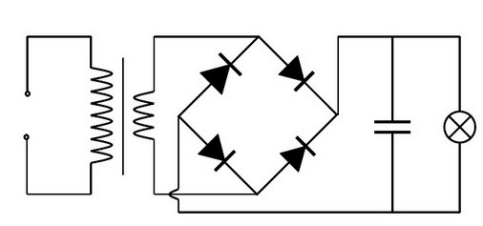
The reason PV modules generate only DC lies in the physics of generation. The core of a module is semiconductor material, predominantly crystalline silicon. When sunlight strikes the semiconductor surface, photons collide with internal electrons, freeing them from atomic bonds to form free electrons and holes. Under the influence of the internal electric field, free electrons move in a fixed direction, producing a continuous, stable, unidirectional current. This current, arising from the photovoltaic effect, maintains a constant direction and relatively steady voltage. In essence, it is no different from the DC output of a dry battery or power bank — usable only by DC devices.
In practice, residential loads such as lighting, refrigerators, and air conditioners run on AC. Feeding DC directly would not only fail to power them but could also damage the equipment. Grid transmission uses AC for a straightforward reason: AC incurs lower energy losses over long distances and allows voltage levels to be adjusted via transformers to suit different application scenarios. For a PV system to complete the full cycle of generation, consumption, and grid integration, the DC output from the modules must be converted into standard-compliant AC. This is the fundamental logic behind the inverter's role as the system's hub.
The core distinction between DC and AC lies in whether the current direction changes. DC flows in a fixed direction. AC alternates direction periodically — 50 times per second under China's 50Hz grid standard. The inverter's task is to turn unidirectional DC into bidirectional AC through the high-speed switching of electronic components. This conversion process can be broken down into three tightly connected steps.
The first step is DC input and preconditioning. DC power from the modules, or from the storage battery, enters the inverter's DC input. Module output voltage can fluctuate slightly with changing irradiance, and line transmission may introduce noise. These instabilities would compromise AC quality or even damage internal components if passed directly downstream. The inverter therefore begins by preconditioning the input: a filter circuit removes noise, and a voltage regulation circuit stabilizes the voltage within a defined range. For typical residential inverters, the DC input voltage range is between 200V and 800V. This step functions as a screening and purification stage, ensuring the DC entering the next phase is stable and clean.
The second step is high-frequency switching and power conversion. The inverter houses high-speed switching devices, with IGBTs and MOSFETs being the mainstream choices. These switches turn on and off at frequencies reaching tens or even hundreds of thousands of times per second, thereby changing the direction of current flow. Once stable DC is applied, the switches alternate state at a preset frequency — current flows in one direction when the switch is on, and in the reverse direction when it is off. Through this high-frequency switching, unidirectional DC is converted into square-wave AC with alternating direction. Switching speed directly determines inversion efficiency: the faster the switching, the smoother the directional transition, and the less effort required for subsequent waveform shaping. Mainstream residential inverters today operate at switching frequencies of 10kHz to 20kHz. Meanwhile, a power regulation circuit within the inverter adjusts output in real time according to load demand and grid conditions, maintaining stability throughout the conversion.
The third step is filtering and regulated output. The square wave emerging from high-frequency switching has unstable voltage and frequency, with visible waveform spurs that make it unsuitable for direct use by appliances or for feeding into the grid. The filter circuit removes these spurs, smoothing the waveform. The regulation circuit then locks the output voltage and frequency to standard levels. In China, the residential standard is 220V at 50Hz, with industrial supply at 380V at 50Hz. Some overseas markets, including the United States and Japan, use 110V at 60Hz. After this final step, the DC has been fully transformed into a standard sinusoidal AC waveform, ready to power household loads directly or to synchronize with the grid.
To summarize, the AC output from an inverter is not ready for use the moment conversion finishes. It must satisfy three mandatory conditions, which together serve as the core benchmarks for inverter performance.
The first is voltage stability. The fluctuation range must stay within ±5%. For a 220V nominal supply, the acceptable band is 209V to 231V. Voltage swings — too high or too low — can cause lights to flicker and air conditioners to cycle erratically at best, or burn out internal power modules in appliances at worst. The inverter's voltage regulation circuit must possess real-time adjustment capability to handle module output fluctuations and load variations.
The second is frequency accuracy. The output frequency must match the local grid frequency and appliance requirements, with a deviation not exceeding ±0.5Hz. Frequency instability affects motor speeds and shortens equipment lifespan. In grid-connected operation, the inverter's output frequency must synchronize completely with the grid; otherwise, connection cannot be established.
The third is waveform purity. The output must be a true sine wave, free from visible distortion or spurs. An impure waveform introduces harmonic interference, disrupting the operation of sensitive equipment such as computers and precision instruments. Mainstream inverters today employ high-precision filter circuits to keep total harmonic distortion within 5%, meeting the requirements of residential, industrial, and grid-connected applications.
Only by satisfying all three conditions can an inverter ensure that the DC generated by the modules is genuinely converted into usable AC, and only then can it underpin the sustained operation of the entire PV system. It is for this reason that the inverter is referred to as the heart of a PV system. Its inversion efficiency directly determines the system's generation returns. Current mainstream inverters achieve efficiencies between 95% and 98% — the higher the efficiency, the lower the energy losses, and the greater the actual returns for the user.
Within a PV system, the inverter is the component that runs continuously yet is most easily overlooked. Modules sit on the roof, and batteries are housed in cabinets — both are perceptible pieces of hardware. The inverter, by contrast, is typically installed in an inconspicuous location, its operating status accessible only through on-screen data or remote monitoring. Yet it is precisely this device that determines whether the electricity generated by the PV system can be turned into usable power. For users, understanding the basic working logic of the inverter means gaining the foundational ability to assess the state of their system.