


The most common mistake when configuring a solar system for a farm is not budget shortage — it's copying a residential or commercial setup. Wrong scenario means no matter how high the power or how premium the components, the system simply won't work. What does a farm really need? Off-grid capability, motor load handling, outdoor durability, and sufficient capacity without waste. Get these four principles right, and the configuration logic falls into place naturally.
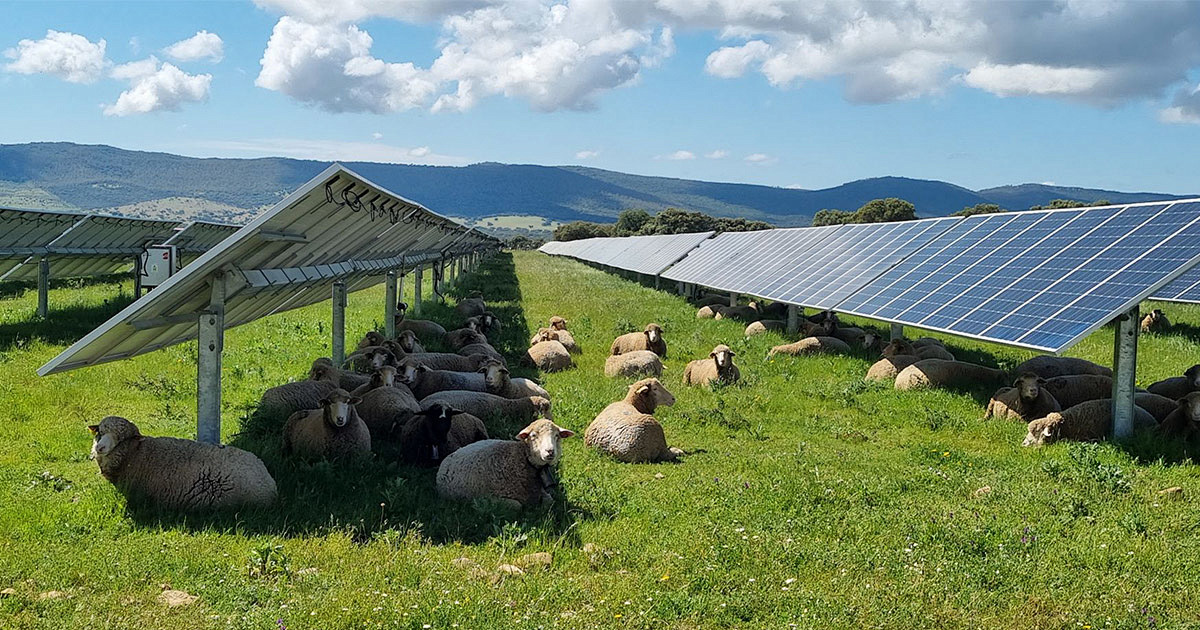
Most farms are located in remote areas with weak grid coverage, where voltage fluctuations and sudden outages are common. Core production equipment such as pond aerators and irrigation pumps — once stopped — can cause irreversible losses within minutes, including fish kills or crop wilting. Therefore, the first hard requirement for a farm solar system is: must have independent off-grid operation capability with energy storage, enabling seamless switchover during outages and keeping critical loads running at all times.
Farm electricity demand is dominated by inductive motor loads. Starting currents for pumps, aerators and feeders are typically two to three times their rated current. If the inverter's load capacity is insufficient, motor start failure or equipment burnout will follow. Additionally, equipment such as lighting, monitoring and temperature control systems often run intermittently, so the system needs flexible load management to avoid wasteful energy consumption.
Environmental conditions are equally demanding. Outdoor installation means year-round exposure to sun, rain, large temperature swings and dust. In coastal or saline-alkali areas, salt mist corrosion is an added challenge. Every component — panels, inverter, battery and accessories — must meet high standards for weather resistance, waterproofing, dust protection, corrosion resistance and anti-aging performance to ensure long-term stable operation in the field and reduce maintenance frequency.
Cost is another hard constraint. Farm operations are all about return on investment. The solar system must meet production needs without blindly oversizing. Based on current electricity load profiles of small and medium-sized farms, system power can be divided into three suitable ranges. Among them, the 4kW–8kW range has the broadest applicability, covering over 80% of small and medium-sized farms. Typical loads in this range include 2–3 pumps, 3–4 aerators, automatic feeders, greenhouse temperature control equipment, plus site-wide monitoring and lighting — adequate to support production and operations without significant power redundancy. Small farms — such as family-owned plantations or small fish ponds — are suited for 2kW–4kW off-grid solar + storage systems. Loads are typically 1–2 small pumps and aerators, plus basic lighting and monitoring. Low power demand, quick installation, fast payback. Large farms — such as large-scale livestock farms or large plantations — are suited for 10kW–20kW off-grid solar + storage systems. Loads include multiple high-power pumps, large aerator clusters, automated feeding systems, greenhouse HVAC and high-definition monitoring. Some scenarios also require powering small processing equipment, necessitating multiple panel strings, high-power inverters and large-capacity storage.
There is one golden rule for sizing: size by load, not by chasing high power. The calculation is simple — sum the rated power of all core loads, then add 20–30% margin for motor starting surges and future expansion. This gives you the total system power. It ensures the system can drive all loads without waste.
Below is a standardized configuration for the most broadly applicable 4kW–8kW range, structured into four categories: panels, inverter, battery and accessories. Key parameters are summarized in the table.
Component | Recommended Specification | Quantity | Protection Rating | Key Metrics |
Panels | 550W bifacial monocrystalline PERC/Shingled, aluminum corrosion-resistant frame | 4kW: 7–8 pcs 6kW: 11–12 pcs 8kW: 14–15 pcs | IP68 | Efficiency 20%-22%, annual degradation ≤0.5%, lifespan ≥25 years |
Inverter | Off-grid MPPT pure sine wave all-in-one, built-in multi-channel MPPT, supports WiFi monitoring | 1 unit | IP65 | MPPT efficiency ≥99%, 220V output, load capacity ≥1.5x rated power |
Battery | LiFePO4 battery, modular design with built-in BMS | 4kW: 10–15kWh 6kW: 15–20kWh 8kW: 20–30kWh | IP65 | Cycle life ≥3000 cycles, operating temp -20℃~60℃, switchover ≤10ms |
Accessories | Mounting: hot-dip galvanized steel fixed rack, tilt adjustable by latitude, thickness ≥2.0mm Cables: PV-specific weather-resistant cables (XLPE insulation) Connectors: waterproof MC4 | Site-specific | Rack: wind-resistant ≥12級 Cables: IP67 Connectors: IP68 | Cable gauge: 4mm² for 4kW, 6mm² for 6–8kW Transmission loss ≤2% |
The above table provides field-verified recommendations for farm applications. A few additional points worth noting during selection:
lPanels : Polycrystalline panels have low efficiency and poor low-light performance; standard single-glass panels lack weather resistance and age quickly — neither is suitable for long-term farm use.
lIf the site has trees or structures causing shading, shingled panels reduce shading loss by more than 30% compared to conventional layouts — prioritize these.
lInverter : Square wave or modified sine wave output can cause motor heating and even burnout. For inductive loads, pure sine wave is mandatory.
lBattery:Lead-acid batteries have short lifespan, poor temperature tolerance and high maintenance requirements — not recommended.
lAccessories : In humid or salt-mist areas, use corrosion-resistant types throughout. Install distribution boxes, residual current devices and circuit breakers. Ensure proper lightning protection and grounding.
Practical purchasing tips:Prioritize complete standardized systems. Piecemeal procurement often leads to component incompatibility, power mismatch, and more complex installation and after-sales support;Don't blindly chase high power. Size by load with moderate margin — sufficient without waste;Value brand and after-sales support. Choose reputable brands with proper certifications, and prioritize manufacturers that offer on-site installation and ongoing maintenance;Adapt installation to site conditions — adjust panel angles based on orientation and shading, secure mounting firmly, ensure grounding and lightning protection, route cables neatly, and protect against machinery run-over and rodent damage.
The configuration logic for farm solar systems ultimately comes down to three principles: fit the scenario, be reliable, and deliver the best value for money. It doesn't chase the compact convenience of residential systems or the high-power investment of commercial systems. The core goal is always the same: ensure continuous power for production, withstand harsh outdoor conditions, and reduce electricity costs. Approach farm solar as a reliable power infrastructure asset rather than a power generation asset — the results will be far better.