


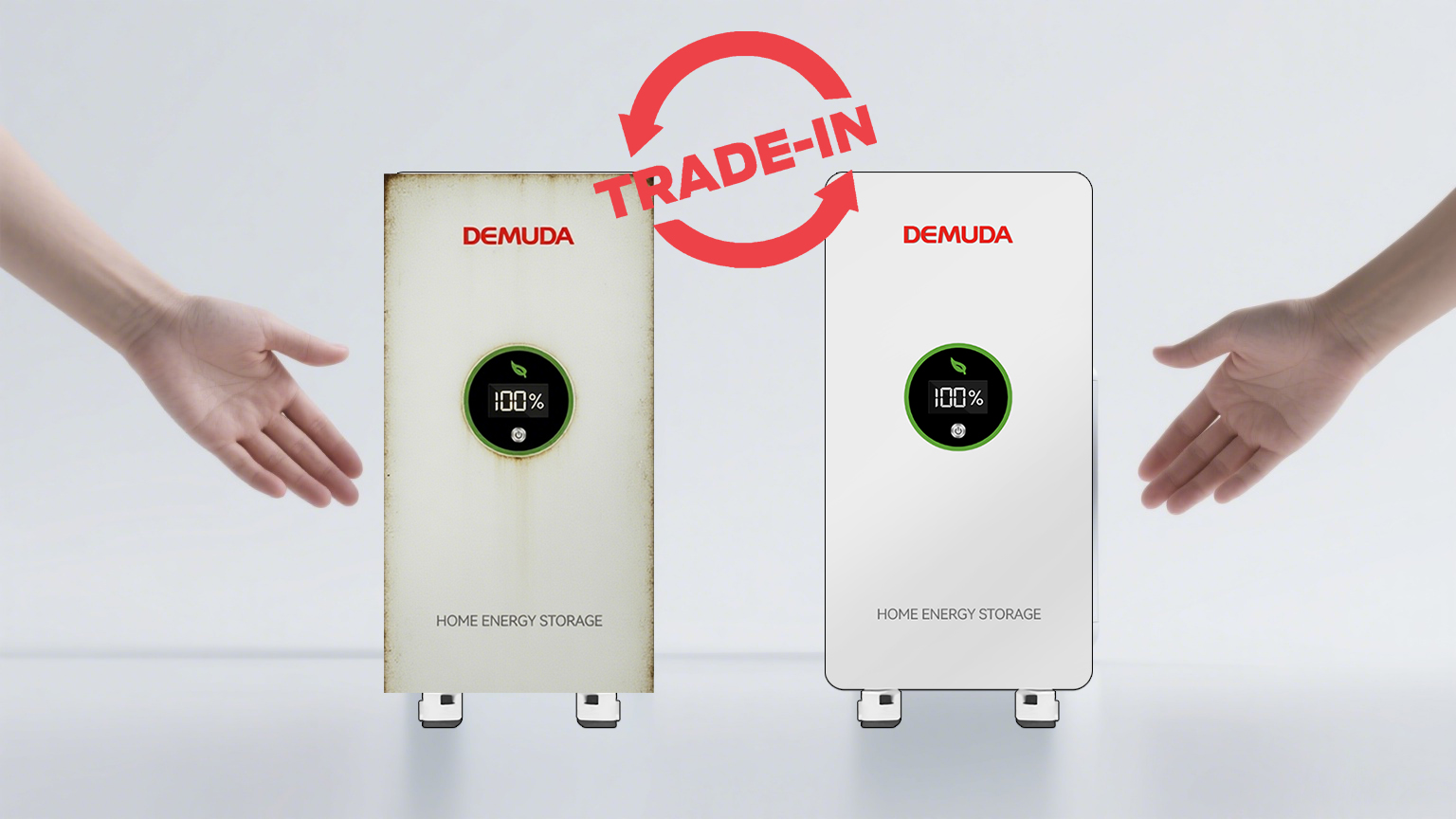
As the core component of energy storage systems, the market scale of energy storage batteries has expanded rapidly with the growth of renewable energy installed capacity and the popularization of distributed energy systems. However, after a certain usage cycle, energy storage batteries gradually decline in performance until they are retired. If a large number of retired batteries are not properly disposed of, it will not only cause resource waste but also may lead to environmental pollution and other problems. Against this background, I believe that energy storage batteries should form a trade-in model like other household appliances, because this model not only provides users with affordable solutions, but also plays a vital role in resource recycling, environmental protection, and industrial sustainable development. However, the current trade-in model for energy storage batteries is not in a mature state. Let's discuss the current situation and feasibility of energy storage battery trade-in.
Tesla has constructed a full industrial chain model of "recycling detection - cascading utilization - material recycling". Its characteristics include:
1.1 The intelligent detection system can complete the battery health status assessment within 15 minutes.
1.2 A hierarchical processing system: S-grade batteries are used for Powerwall refurbishment, A-grade batteries are converted into commercial energy storage, and B/C-grade batteries enter material recycling.
1.3 The Nevada factory uses dry metallurgy technology, with a lithium recovery rate of 92%, leading the industry.
Texas has innovated a joint model of "power company + integrator", and users participating in trade-in can simultaneously enjoy:
1.1 A 15%-20% deduction for old batteries on the price of new equipment.
1.2 A 20% discount on grid service fees.
1.3 Priority to participate in demand response projects to obtain benefits.
China has formed a development path of "policy regulation + leading demonstration":
1.1 The Administrative Measures for the Recycling and Utilization of Power Batteries for New Energy Vehicles issued by the Ministry of Industry and Information Technology clarifies the producer responsibility.
1.2 BYD's "30% deduction + cascading utilization in communication base stations" model has covered 80% of provincial regions.
1.3 CATL realizes the full life cycle traceability management of batteries through the Internet of Things platform.
Japanese enterprises focus on refined operations:
Panasonic has developed a multi-parameter rapid detection system (3 minutes per battery) that controls the evaluation error within 5%. Its "Battery as a Service" model in cooperation with Sumitomo Mitsui Banking Corporation allows users to pay monthly rent including trade-in rights, reducing the initial investment in household energy storage by 60%.
1.1 Europe is strong in the policy system, North America excels in technological innovation, and the Asian market grows the fastest.
1.2 The deduction ratio is generally in the range of 20%-30%.
1.3 The main directions of cascading utilization: communication backup power (China), industrial and commercial energy storage (US), and household energy storage (Japan).
1.4 The global power battery recycling market scale has exceeded 15 billion US dollars in 2024, with a compound annual growth rate of 28%.
The purchase cost of energy storage batteries is relatively high, and for household users and industrial and commercial users, replacing new batteries often requires a large expenditure. The trade-in model can directly reduce the cost for users to purchase new batteries and improve users' enthusiasm for replacing batteries. For example, BYD launched a trade-in program, where users can deduct 30% of the cost of the new system with old batteries. This preferential strength has great appeal to users. According to surveys, after the launch of this program, the market sales of BYD's energy storage batteries have significantly increased, and user feedback is good.
From the perspective of enterprises, recycling old batteries for cascading utilization or dismantling and recycling key metals can reduce raw material procurement costs. Taking GEM as an example, its power battery recycling rate exceeds 95%, the cost of lithium carbonate extraction is 30% lower than that of mine mining, and the recycling business contributed 15% of lithium resource supply in 2024. By carrying out the trade-in model, enterprises can not only obtain a stable source of old batteries but also enhance their market competitiveness while reducing costs. In addition, with the promotion of the trade-in model, enterprises are expected to further expand their market share, achieve economies of scale, and further reduce production costs.
The trade-in model can stimulate the demand for energy storage batteries and expand the market scale. With the expansion of the market scale, enterprises can achieve economies of scale, further reduce production costs, and form a virtuous cycle. According to statistics, the global household energy storage market scale reached a new height in 2024, in which the trade-in model has played an important role in promoting market growth. In China, with the rapid development of the household energy storage market, the trade-in model will further stimulate market potential and inject new vitality into the development of the energy storage industry.
In terms of detection and evaluation, advanced technologies based on big data and artificial intelligence have matured, which can accurately analyze key indicators such as the remaining capacity and health status of batteries. Take LG Energy Solution's intelligent AI BMS system as an example, which reduces the failure rate by 70% through real-time monitoring of battery operation data, providing a reliable basis for recycling evaluation.
Retired batteries are accurately graded and applied according to different decay degrees. Batteries with a capacity retention rate of more than 80% are suitable for scenarios such as communication base station backup power, those with 70%-80% are used for low-speed electric vehicles, and those with 50%-70% are applied to solar street lamps and other fields. Practice has shown that this graded utilization model can increase the full life cycle value of batteries by more than 40%.
In terms of dismantling and recycling, wet recycling technology has been relatively mature, which can efficiently extract key metals such as lithium, cobalt, and nickel from batteries and make their purity reach the battery grade standard for the production of new batteries. For example, the wet metallurgy technology adopted by GEM has a lithium recovery rate of more than 95%, effectively alleviating the problem of lithium resource shortage. At the same time, some enterprises are also exploring new technologies such as dry recycling and physical recycling, continuously improving recycling efficiency and resource utilization rate, and reducing environmental pollution risks in the recycling process. For example, the dry recycling technology developed by an enterprise realizes the effective separation of metal and non-metal materials in batteries through mechanical crushing and physical separation, with the advantages of high recycling efficiency and little environmental pollution.
Countries around the world are strengthening their attention to environmental protection and have introduced a series of strict environmental protection policies, requiring enterprises to properly recycle and dispose of retired batteries. For example, the EU Renewable Energy Directive requires that new residential buildings be equipped with energy storage by 2030 and formulates detailed standards and specifications for battery recycling. The Ministry of Industry and Information Technology of China also requires that new energy storage projects by 2025 be equipped with recycling plans, prompting enterprises to actively participate in battery recycling and the promotion of the trade-in model. The introduction of these policies provides strong policy guarantees for the implementation of the energy storage battery trade-in model.
In order to promote the development of the energy storage industry, governments have introduced industrial support policies. China's "14th Five-Year Plan" for new energy storage promotes the shift of household energy storage subsidies from equipment subsidies to kilowatt-hour rewards. Eight provinces including Inner Mongolia and Shandong have piloted a capacity compensation mechanism to explore long-term cost recovery paths. The United States also encourages enterprises and users to invest in energy storage projects through policy tools such as tax credits and subsidies. While these policies promote the development of the energy storage industry, they also provide a good policy environment for the trade-in model and encourage enterprises to increase investment in the field of battery recycling and reuse.
Currently, the energy storage battery recycling market lacks standardized management, and a large number of informal workshops flood the market. These enterprises lack professional equipment and technology, dismantle batteries at will, and cause environmental pollution by harmful substances. At the same time, they purchase old batteries at high prices, making regular enterprises face the dilemma of "no raw materials", with a capacity utilization rate of less than 30%, which seriously disrupts the market order.
Due to the lack of unified evaluation standards, different enterprises have large differences in the pricing of old batteries, making it difficult for consumers to judge the true value and often a disadvantage in transactions. Price confusion also increases the difficulty of supervision, hinders the formation of a fair competition environment, and affects the promotion of the trade-in model.
Consumers have a low awareness of trade-in: some people have weak environmental awareness and think that old batteries can be discarded at will; others are worried about the leakage of personal information (such as power consumption data). In addition, the complex process also reduces the willingness to participate, restricting the popularization of the model.
In actual use, energy storage batteries of the same batch will have different performance degradation due to differences in charging and discharging frequency, ambient temperature, and other factors. This inconsistency brings challenges to cascading utilization - mixing batteries in different states will lead to uneven charging and discharging, causing overcharging, over-discharging, and even thermal runaway risks, affecting the stability and safety of the system. For example, if a communication base station backup power uses a battery pack with poor consistency, it may fail frequently and cannot ensure emergency power supply. Although sorting technology can partially alleviate this problem, it is still difficult to completely solve it due to complex use conditions.
Accurately evaluating the remaining capacity and health status of old batteries is the key to recycling, but existing technologies have difficulty balancing efficiency and accuracy. High-precision methods (such as electrochemical impedance spectroscopy detection) have reliable results but are time-consuming and costly, unable to meet large-scale needs; while rapid detection (such as voltage/current analysis) has large errors, prone to value misjudgment, causing transaction disputes and affecting the rationality of subsequent processing schemes.
There are many types of energy storage batteries (such as lithium-ion batteries, lead-acid batteries, etc.), and their chemical compositions and structural designs vary greatly, requiring the development of special dismantling processes. The dismantling of lithium-ion batteries is highly risky, and the electrolyte is flammable and toxic. Improper operation may cause explosions or pollution. In addition, although metal recycling technologies (such as wet metallurgy) can extract key materials such as lithium and cobalt, they still face problems such as low efficiency, high cost, and wastewater treatment, which urgently need technological optimization and breakthroughs.
In 2024, more than 500,000 tons of energy storage batteries were recycled through formal channels globally, and the extracted lithium, cobalt, nickel, and other metals effectively alleviated the pressure of resource shortage. Taking China as an example, the output of lithium carbonate recycled by enterprises such as GEM is equivalent to 20% of China's lithium mine output, which significantly reduces the dependence on primary minerals and reduces environmental damage caused by mining.
The trade-in model has greatly reduced the replacement cost for users and promoted market growth. In 2024, the number of household energy storage users in Europe increased by 50%, and the scale of China's household energy storage market surged by 80% year-on-year to 38 billion yuan. Consumers not only enjoy price discounts but also improve the use experience of energy storage systems, forming a market cycle.
This model ensures the standardized treatment of retired batteries and avoids soil and water pollution. Through cascading utilization and material recycling, it reduces the energy consumption and carbon emissions of new battery production. For example, Zeroka's "full-chain negative carbon" model significantly reduces the carbon emissions of products throughout their life cycle, providing a demonstration for the sustainable development of the industry.